
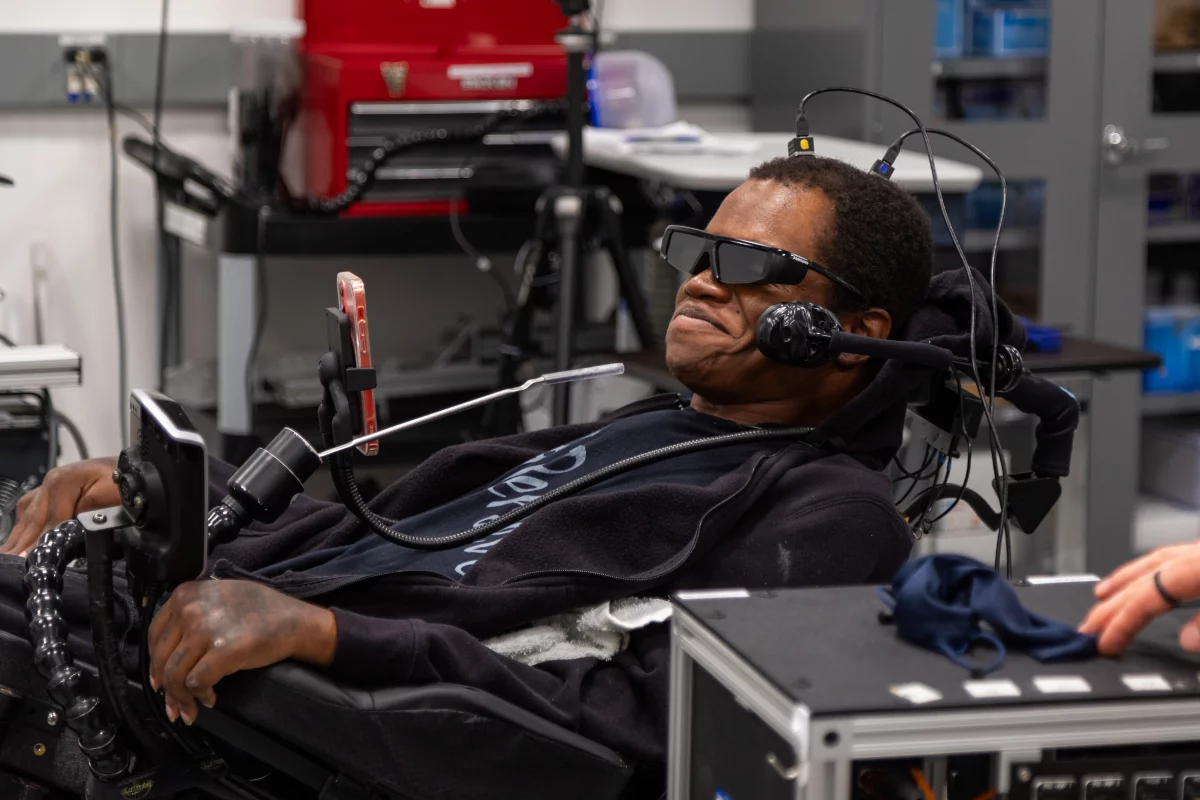


People who have lost the ability to move or speak may soon have a new option: surgically implanted devices that link the brain to a computer.
More than two decades after researchers first demonstrated that a person could move a computer cursor with their thoughts, several firms are poised to take the brain-computer interface (BCI) from experimental curiosity to commercial product.
“We know it works, we know the enabling technologies are now ready,” says Michael Mager, the CEO of Precision Neuroscience. “It’s time to turn this academic work into a thriving industry that can make a big impact on people’s lives.”
Already, experimental brain-computer interfaces have been implanted in dozens of people. The latest devices go under the skin and can communicate wirelessly with a smartphone or tablet.
Elon Musk’s Neuralink is the most visible player in the BCI field. But the first product to reach the market may well come from competitors including Precision, Blackrock Neurotech, Paradromics, or Synchron.
Some of these companies, like Blackrock, have much more experience than Neuralink. Others use less invasive, and potentially safer, technology that may make it easier to get approval from the Food and Drug Administration.