
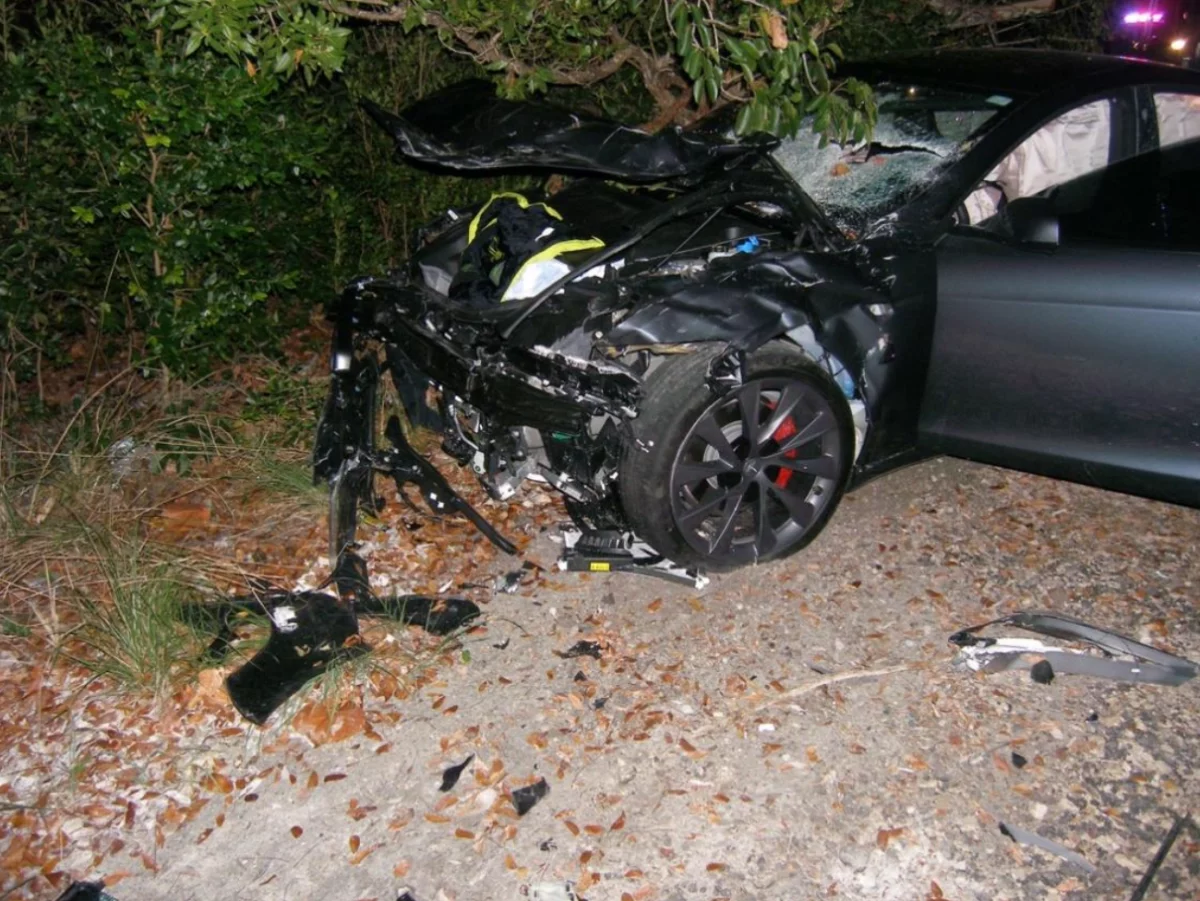


George McGee was behind the wheel of his Tesla Model S in April 2019 when the car sped through a T intersection near Key Largo, Fla., crashing into a parked SUV at more than 50 miles per hour.
“I was driving, I dropped my phone, and looked down,” McGee told police at the scene. “I ran the stop sign and hit the guy’s car.”
Before the crash, McGee had engaged the system that Tesla calls Autopilot, which can steer, brake and accelerate the car on its own.
But that didn’t stop the Tesla from slamming into the parked Chevrolet Tahoe. The impact of the crash killed 22-year-old Naibel Benavides Leon, who had been standing next to the parked SUV with Dillon Angulo. Angulo was severely injured, while Benavides’s body was found about 75 feet away.
This is one of many lawsuits against Tesla that question the safety of the company’s driver-assistance systems, and accuse the company of exaggerating their capabilities. But few of these cases have actually gone to trial, with Tesla often settling claims outside the courtroom.
Tesla insists its cars are safe as long as drivers remain attentive. When used correctly, the company argues, its driver-assistance technology is preventing crashes and saving lives.
Federal safety regulators have opened multiple investigations into Tesla’s driver-assistance systems, including Autopilot and a more sophisticated system known as Full Self-Driving (Supervised).
Lawyers for the plaintiffs accuse the company of overpromising what its technology can do in order to sell cars.